NEWS RELEASE
California Board of Forestry and Fire Protection Releases Latest Draft of Zone 0 Defensible Space Regulations Ahead of Public Workshop in Southern California
New proposal reflects extensive public input and provides a balanced, phased approach to wildfire safety and local flexibility.
FOR IMMEDIATE RELEASE
April 17, 2026
Sacramento, CA — A California Board of Forestry and Fire Protection subcommittee today released an updated draft of proposed Zone 0 defensible space regulations, marking another step in the state’s ongoing effort to better protect homes and communities from wildfire.
Directed by first-of-its-kind legislation including Assembly Bill 3074 (2020), Senate Bill 504 (2024), Assembly Bill 1455 (2025), and Governor Gavin Newsom’s Executive Order N-18-25 in early 2025, the proposed regulations add to California’s growing list of wildfire resilience efforts and focus on wildfire safety actions for the first five feet around homes and structures—an area where professional experience and research indicate that homes are most vulnerable to ignition from embers.
The draft regulations were informed by extensive public input and reflect a flexible approach that empowers homeowners and local governments to take action.
“This area is the most critical zone for protecting a home, and neighborhoods, during a wildfire,” said Board Chair Terry O'Brien. “We’ve taken a thoughtful, science-based approach to develop proposed standards that will meaningfully reduce risk while still being practical for homeowners.”
A Refined Approach Built on Public Input and Fire Safety
Over the past year, the Board conducted extensive outreach, including nearly a dozen public workshops, numerous site visits, research and academic reviews, and on-the-ground engagement with homeowners, fire professionals, environmental groups, and local governments in their neighborhoods.
The process surfaced multiple perspectives from different regions of the state on how to address flammable materials located in Zone 0—with particular attention to trees and other living vegetation commonly in the area surrounding the first five feet outside a home.
To help facilitate this discussion, the subcommittee took input and consolidated different approaches into a single recommendation. Now, the updated draft reflects a single option for subcommittee consideration, incorporating a range of viewpoints, statutory requirements, and considerations for implementation such as affordability, enforcement, and local flexibility.
“We’ve heard valuable input and feedback from all corners of the state and have worked hard to draft rule text that threads the needle across a very complex set of mandates, risks, and values,” said Executive Officer Tony Andersen. “This proposal reflects a critical next step in the Board’s process—grounded in science, shaped by communities, and focused on what will actually work on the ground.”
What the New Zone 0 Rules Would Require
The updated draft rule includes a phased-in implementation approach that prioritizes education and outreach over a 5-year period. While Zone 0 requirements will apply to new construction upon adoption of the regulation, existing homes and structures can implement actions in phases over time within different areas of Zone 0:
● PHASE 1 (Implemented within the first 3 years): Includes removing combustible items such as firewood, dead leaves and branches, mulch, and wood chips within 5 feet of the structure. Cleaning gutters, removing dead and dying plants, trimming trees according to regulations, and implementing or adjusting for allowable vegetation during this time period.
● PHASE 2 (Implemented within 5 years, with the exact timeline to be decided by local jurisdictions): Local jurisdictions will assign a timeline, within 5 years of the effective date of the regulations, for the creation of an under-eave safety zone, replacing combustible gates, and making any necessary adjustments to sheds and fencing.
The proposed regulations would apply to homes in the State Responsibility Area (SRA) and Very High Fire Hazard Severity Zones in Local Responsibility Areas (LRA).
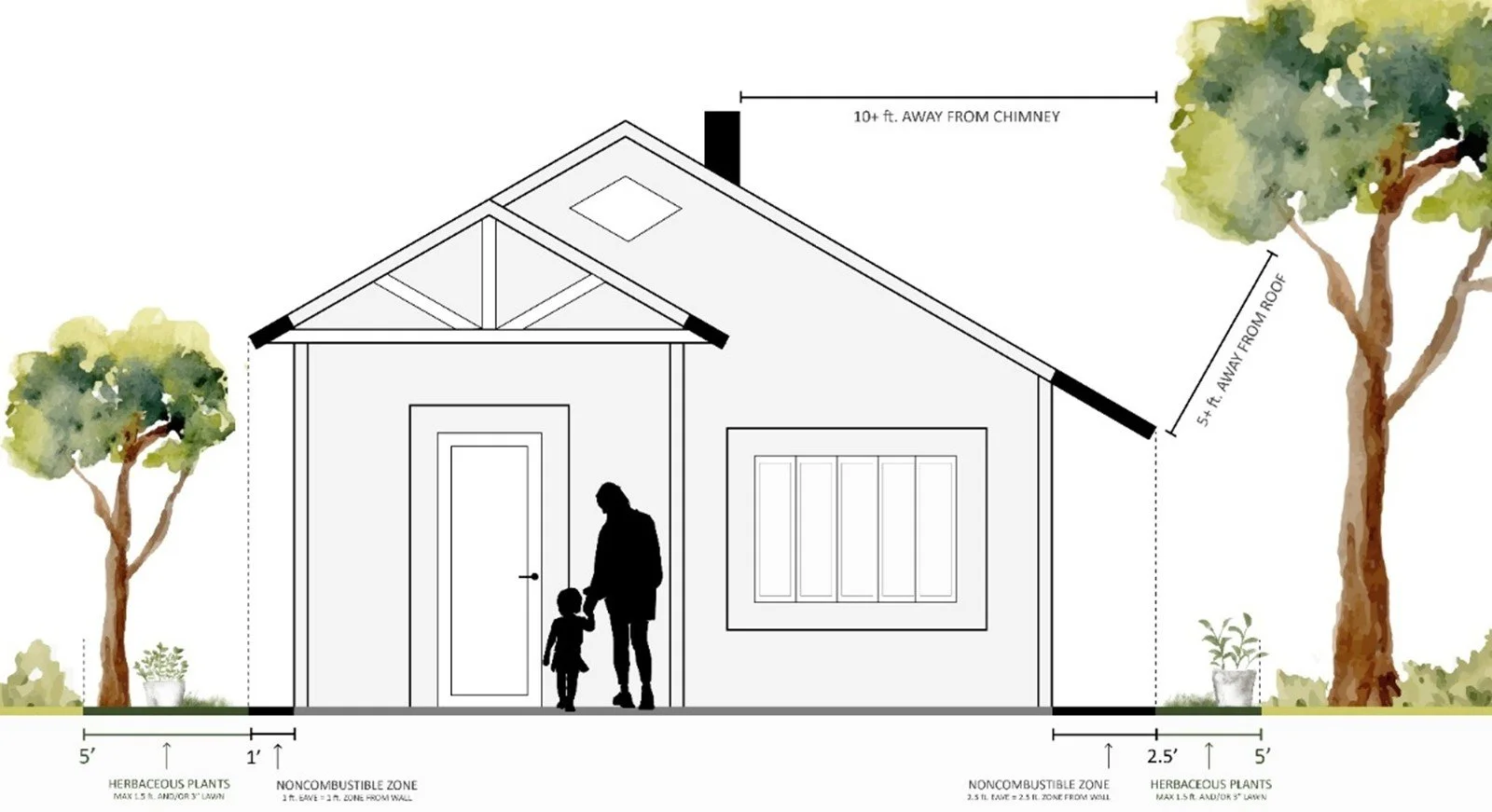
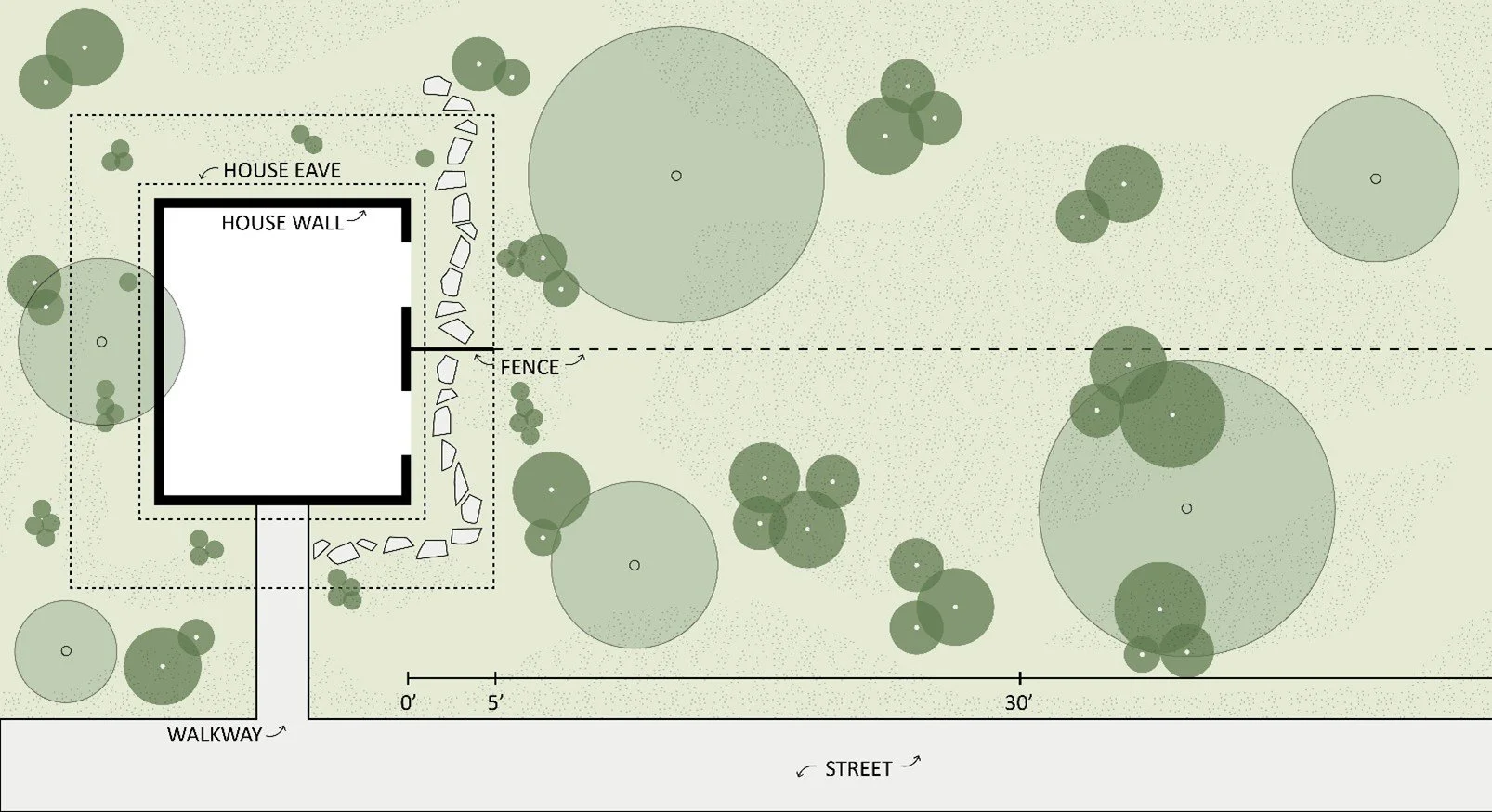
At a high level, the rule involves two distinct areas within the first five feet of a structure (see images below for more information):
● A low-combustibility zone extending out from an area immediately next to the home, or the area under eaves, to the remaining portion of the five feet that comprises Zone 0—or roughly an area of four feet depending on a structure’s eave size.
● A non-combustible immediate “safety zone” directly next to the home and under eaves. This zone width flexes with the width of the eave. For example, if the structure has one-foot eaves, the safety zone is one foot in width. If the structure has two-foot eaves, the safety zone is two feet in width.
This nested approach is designed to protect the most vulnerable parts of a structure—such as the base of the wall, windows, decks, and eaves—while still allowing for flexibility based on the attributes of the home or structure.
Vegetation and Landscaping Are Allowed, With Conditions
● No combustible materials (like bark mulch, dead leaves, wood chips, or firewood) are allowed within the five feet of Zone 0, including on roofs and in gutters. Dead and dying vegetation is not allowed and the area should be regularly cleaned.
● Then, the “safety zone,” or a vegetation-free buffer, is required:
o Within 1 foot of structures or out to the edge of the eave (or “drip line”)
o Where the eaves are shallow, and the safety zone may not apply:
A safety zone of 1 foot is still required
Within two feet of windows, doors, and vents
Within five feet of attached decks and similar features
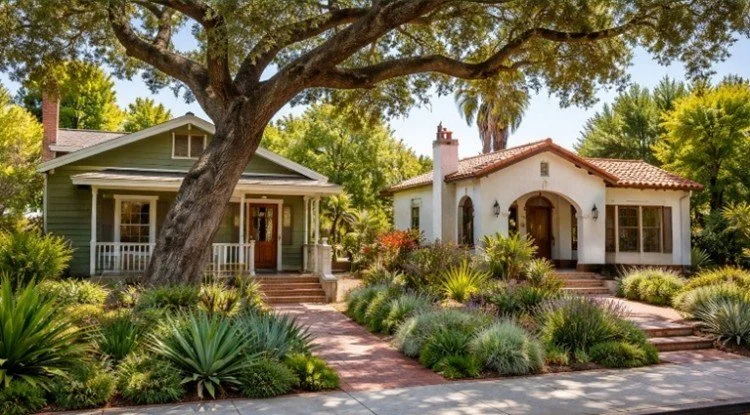
● Well-maintained herbaceous plants and flowers are allowed outside these buffers within Zone 0, with the following conditions:
o Smaller non-woody plants, such as bulbs, poppies, petunias, and succulents are allowed in spaced groupings;
o Low ground covers, such as moss, beach strawberries, and creeping thyme are allowed per requirements;
o Grass or lawn is allowed but must be maintained per requirements;
o Potted plants in easily movable non-combustible containers are allowed.
Trees Are Allowed, With Conditions
● Trees are allowed, but must be maintained:
o Branches should be ten feet from chimneys per existing statute. Branches should also be trimmed five feet above roofs and trimmed so that they are not under eaves.
o Dead wood and lower branches or “ladder fuels” that could carry fire upward should be removed. Limbs should be removed from the bottom six feet for large trees, or from the lower third of the tree for smaller trees.
Fences, Gates, and Structures in Zone 0
● A five-foot non-combustible section is required where fences attach to a home, to be completed in Phase 2. Examples could include replacing the combustible gate with a non-combustible metal gate.
● No new combustible fences or gates should be built within Zone 0, but repairs can be made to existing fences.
● Any sheds and outbuildings within Zone 0 must have non-combustible exterior roofs and walls.
Flexibility for Local Conditions
Recognizing California’s diverse landscapes and communities, the proposal also allows local fire agencies to implement alternative approaches—provided they achieve equivalent fire safety outcomes. Using a range of decision-making factors, communities can also choose more stringent standards based on their individual fire safety hazard or risk.
“This isn’t a one-size-fits-all approach,” O’Brien added. “We’re building in flexibility so local experts can tailor solutions unique to their individual communities while maintaining meaningful fire safety standards.”
Timeline and Phased Implementation Focused on Education, Not Penalties
The Board has emphasized that implementation will prioritize education and outreach—not penalties—once this regulation is approved. For new construction, compliance with this regulation is required upon adoption. Existing homes will then be phased in during two phases outlined above, with early adoption being recommended.
The goal is to give homeowners time, resources, and guidance to make changes effectively and affordably.
Continued Public Engagement, Public Assistance Planning, and Next Steps
The Board continues to actively seek public input on the draft regulations before being considered by the full Board of Forestry and Fire Protection. The Board is also tracking a range of legislative proposals, tax savings offers, grants, funding mechanisms, service organizations, and other resources and assistance committed to supporting communities and implementing this regulation.
“Extensive public feedback, professional expertise, and communities willing to roll up their sleeves have been essential to getting us to this point, and it will continue to shape where we land,” said Andersen. “We encourage everyone—homeowners, local agencies, and community members—to stay engaged.”
Once the Zone 0 Regulations Subcommittee decides to forward a recommendation, the draft regulation will then go before the full Board of Forestry and Fire Protection for consideration and approval.
● READ: The Summary Sheet and draft rule plead for more information, including example images.
● WATCH: This explainer video about what this means in more detail.
How to Participate
● JOIN: The April 23 Southern California workshop in-person or online (Agenda here).
● SUBMIT: Comments to the Board at PublicComments@bof.ca.gov
● REVIEW: Materials and FAQs: Visit the Board’s Zone 0 webpage
● TRACK: Upcoming meetings and opportunities for input
About the California Board of Forestry and Fire Protection
The Board of Forestry and Fire Protection is responsible for developing and overseeing forest policy and wildfire regulations in California, with a mission to protect the state’s forests, watersheds, and communities.